By Andrew Sandevick and Will Wong
Secrets to a Perfect Paella: Mastering the Fire, the Rice, and the Soul of Spain
There are few culinary rituals as captivating, communal, and visually stunning as crafting an authentic Spanish paella. The gentle hiss of olive oil in a wide pan, the rich, smoky aroma of Spanish paprika, the vibrant golden-orange hue of real saffron, and a crown of fresh, premium seafood—it is a sensory feast before you even take your first bite.
While it looks like a masterpiece, making a world-class paella at home is entirely achievable. It isn’t about complicated techniques; rather, it’s about honoring a few essential rules of Spanish kitchen chemistry and using high-quality, authentic ingredients.
Here are the ultimate secrets to elevating your paella from a simple rice dish to an unforgettable culinary experience.
1. The Foundation: The Holy Trinity of Paella
The magic of a great paella lies in its base. If you get these three elements right, the rest of the dish will effortlessly fall into place:
- The Sofrito: This is the flavor engine. A traditional sofrito is a slowly caramelized, aromatic jam of onions, sweet bell peppers, garlic, and grated fresh tomatoes. Sautéed patiently in a generous pool of quality Spanish olive oil, it sweetens and concentrates, laying down a deep, savory foundation.
- Real Spanish Saffron: Often called “red gold,” real saffron threads provide the signature earthy, honey-like aroma and gorgeous golden glow of paella. The Secret: Never toss dry threads directly into the pan. Instead, gently toast them, crush them lightly, and let them steep in a cup of warm broth before adding it to the rice.
- The Right Rice (And No Stirring!): Authentic paella requires short-grain Spanish rice, such as Bomba or Senia. Unlike Italian Arborio (which is creamy), Spanish round rice is prized for its ability to absorb up to three times its volume in flavorful liquid while remaining firm, plump, and beautifully separate.The Golden Rule: Once you pour in your liquid and distribute the rice evenly across your pan, put your spoon away and do not stir! Stirring releases starch, which turns the dish sticky and mushy. Let the rice simmer and absorb the liquid undisturbed.
2. Layering the Proteins: Chorizo, Chicken, and Homemade Stock
Before the rice is added, you want to build complex layers of flavor in your pan:
- Spanish Chorizo & Chicken Thighs: We begin by searing bone-in, skin-on chicken thighs to render their fat and brown the skin, followed by sliced cured Spanish chorizo. The chorizo releases its signature smoky, spiced oils (rich with sweet and hot pimentón), which coat the pan and season the rice grains as they toast.
- Smoked Spanish Paprika (Pimentón de la Vera): Just a teaspoon of this wood-smoked, authentic paprika adds a characteristic wood-fired depth, even if you are cooking on a kitchen stove or patio burner.
- Deep, Rich Homemade Stock: Do not use store-bought cartons here. A truly great paella depends on a robust, homemade stock. Simmer roasted chicken bones with sweet blue crab or shrimp shells, aromatic vegetables, and a pinch of saffron to create a liquid gold that the rice will greedily drink up.
3. The Crowning Glory: Premium Seafood
A show-stopping paella deserves a crown of spectacular, fresh seafood. To keep the textures absolutely perfect, each element should be treated with care:
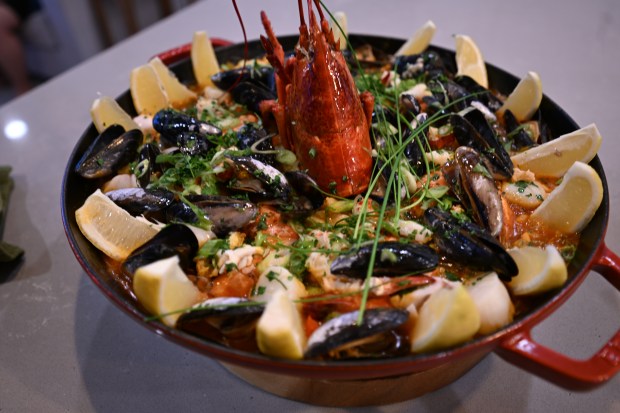
- Lobster: Splitting a fresh lobster lengthwise and resting it right in the center of the pan not only makes for an jaw-dropping presentation but also infuses the rice beneath it with a sweet, luxurious essence.
- Sea Scallops & Rockfish: Wild-caught rockfish holds its shape beautifully without flaking into tiny pieces. We quickly sear the scallops and fish first, remove them, and tuck them back into the rice during the final minutes so they remain tender and succulent.
- PEI Mussels & Large Prawns: Fresh Prince Edward Island mussels are pressed hinge-down into the rice. As they steam open, they release their briny, natural juices directly into the dish. Ring the perimeter of your pan with head-on jumbo prawns for the ultimate coastal finish.
4. The Grand Finale: Achieving the “Socarrat”
The ultimate mark of a paella master is the socarrat—the highly coveted, deeply caramelized, and crispy crust of rice that forms at the very bottom of the pan.
To achieve this:
- When all the liquid has been fully absorbed by the rice, you will hear the sound change from a bubbling simmer to a distinct, gentle crackle.
- Turn the heat up to medium-high for the last 2 to 3 minutes. Keep a close eye (and nose) on it—you want a toasted, nutty aroma, not a burnt one.
- Turn off the heat, cover the pan with a clean kitchen towel, and let it rest for 5 to 10 minutes before serving. This relaxes the top grains of rice while locking in that crispy, smoky crunch on the bottom.
Garnish generously with fresh lemon wedges and long, elegant cuts of wild chives, carry the pan straight to the table, and let everyone dig in!

